2026 Winter/Spring Island Teacher List

Vancouver Island Dance Teachers 

Nanaimo

Lynette

www.lynetteharper.ca      dancetarab@gmail.com   250-797-7953   

LET’S DANCE    With apologies – My weekly multilevel classes are postponed until later in the year. All classes at VIBE Studios, Nanaimo 

*

Pynksy Shell aka Tania Amaral

https://www.facebook.com/tania.amaral.1253/  pynksyshell@gmail.com 

Afro Fusion Sharqi Danceᵀᴹ

Fridays 6:30 Level 1, VIBE dance studio 

www.afro-fusionsharqidance.ca 

*

Ramona 

ramona.passarello@gmail.com  250-616-3824  

Available for private individual and private group lessons.

*

Taissia 

778-269-0922  Dance and Wellness classes   Available for privates and workshops.

*

*

Other Island communities, listed alphabetically:

*

Cortes Island

Meinsje      250-895-1052  

*

Courtenay/Comox/Cumberland/Denman Island/Union Bay

Bridget Salas  bridgetsalasdance.com 

Beginner Indian fusion Tuesdays 5:45-7:00

Datura-style bellydance Tuesdays 7:15-8:30

Datura-style Zills Tuesdays 7:15-8:30

Magnoliamovementarts.com

*

Cathy Stoyko   Call or message (250)218-0704

Available for private classes on Denman Island or in Cumberland 

*

Emily Johnston – Forbidden Dance Company  

https://forbiddendancecompany.com  778-246-3639 

Belly dance levels 1-4 Thursdays 6:30-7:30pm Cloud 9 studio, Courtenay

“So you think you can belly dance?” Levels 5+  7:30-8:30pm

*

Heather Hilberry 250-898-3123 (call or text) 

Teaching on Hornby,  Denman and in Union Bay  

*

Linda Doerksen  halima.dancer@gmail.com    250-703-0494   

Contact regarding future classes in Courtenay. 

*

*

Duncan/Cowichan Area

Darlene Gunkelmann gunkelmanndarlene@gmail.com

12 week Duncan series starting Feb.16

Beginners Foundations 5 -6:15 pm, Multi-Level 6:15-7:15 pm

Studio B (behind Spinning Ninny). 

*

Karensa Camplair   saidisistersstudio.godaddysites.com  karensabellydance@gmail.com      250.715.7541   

Facebook.com/SaidiSisters      

FCBDStyle® (Improvised Style), Sword, Fusion, F.U.N. Belly Dance, and Musicality & Choreography

*

Lara   https://www.facebook.com/lara.brunschot, or drop by her store Spinning Ninny at 310 Duncan St, Duncan

Classes for adults and children. 

*

*

Parksville

Kim Hammett  raven_55@icloud.com   778-679-3082

Mix of Americanized and Fusion style bellydance at Bradley Community Centre.

*

*

Qualicum Beach

Belly Laughs Navel Academy/Elaine De Rooy 

https://www.facebook.com/BellyLaughsNavelAcademy   bellylaughsnavelacademy@shaw.ca  250-752-3750 

Contemporary fusion in-studio classes Wednesdays, Thursdays, Sundays for Beginners, Intermediate and Advanced students.

*

*

Saltspring Island

Sarah Allen  ssisarahlouise@gmail.com 

Alternating a 4 week series with Rasha Gad, Tuesdays 7 to 8:15pm Feb to Jun 2026 and Sept to Nov 2026 at the Ganges Yoga Studio  https://gangesyogastudio.com/

*

Rasha Gad  rashargad@gmail.com

778 993 3406 https://www.artspired.ca/unveil-the-movement

Middle Eastern (belly) dance weekly classes. Egyptian style with cultural context, focus on the connection to the feminine and unique expression. Alternating a 4 week series with Sarah Allen, Tuesdays 7 to 8:15pm Feb to Jun 2026 and Sept to Nov 2026  at the Ganges Yoga Studio  https://gangesyogastudio.com/

*

*

Victoria 

Bashirah Middle Eastern Dance Studio, Victoria    

https://raksbobbie.ca/classes/winter-2026-class-list.html raksbobbie@shaw.ca   

Extensive range of online and studio belly dance classes at Bashirah Middle Eastern Dance Studio, 137 Skinner St.Victoria

*

Candace Aldridge   https://candacealdridge.com/dance-classes/

A fall schedule of live and online classes, featuring Belly dance for multiple levels, Yoga, and more. 

*

Caro Aisha Carof   carisfranco@hotmail.com  250 884 0653

Private classes and group classes from beginners to advanced levels.

*

Darlene Gunkelmann  gunkelmanndarlene@gmail.com

Victoria Classes: 12 Week Series  starting Feb.17

Beginners 5-6:15 pm, Intermediates Choreography 6:15-7:30 pm

Wild Roots Studio. 

*

Mira –  Asmira Dance  

mirabellydancer@gmail.com

*

Negma  

negmadance@gmail.com   https://www.negmadance.com 

*

Taiya Curle 

Fusion Bellydance classes Monday evenings 6:00pm-7:45pm

At the Victoria Truth Centre

For details taiyacurle@gmail.com   250-361-5122 

Spring Workshop in Kelowna 2025


Notes on Lynette’s dance interests:

Lynette has studied Ghawazee dance since the 1980s with luminaries Aisha Ali, Jalilah, Khyriyya, and others, and through archival research. Her troupe Ghawazee choreographies have been staged in Vancouver theatres, Toronto (International Belly Dance Conference of Canada), Seattle (Mediterranean Fantasy Festival), Courtenay, Nanaimo, and many other BC venues. 
Lynette became entranced by Turkish Roman dance in the 1990s, and has developed a distinctive personal style for teaching and performing both Turkish Oryantal and Roman dance based on studies with Reyhan Tuzsuz, Gigi Dilsah, Artemis Mourat, Ferda Bayazit, Sema Yildiz, Ozgen, and others. 
In recent decades Lynette has led weekend dance intensives and 5 day retreats in spectacular locations eg. Dance Vallarta (Puerto Vallarta), DanceAway Mexico (La Manzanilla), Hollyhock Retreat Centre (Cortes Island), Oasis de la Dance – Studio Denise Enan (Quebec), Denman Island Dance Retreats, Smithers Dance Camp, and other BC locations (eg.Victoria, Tofino, Thetis Island, Quadra Island, Gabriola Island, Cumberland). She regularly presents classes and workshops on and around Vancouver Island.

In Performance

Dance Vallarta 2013

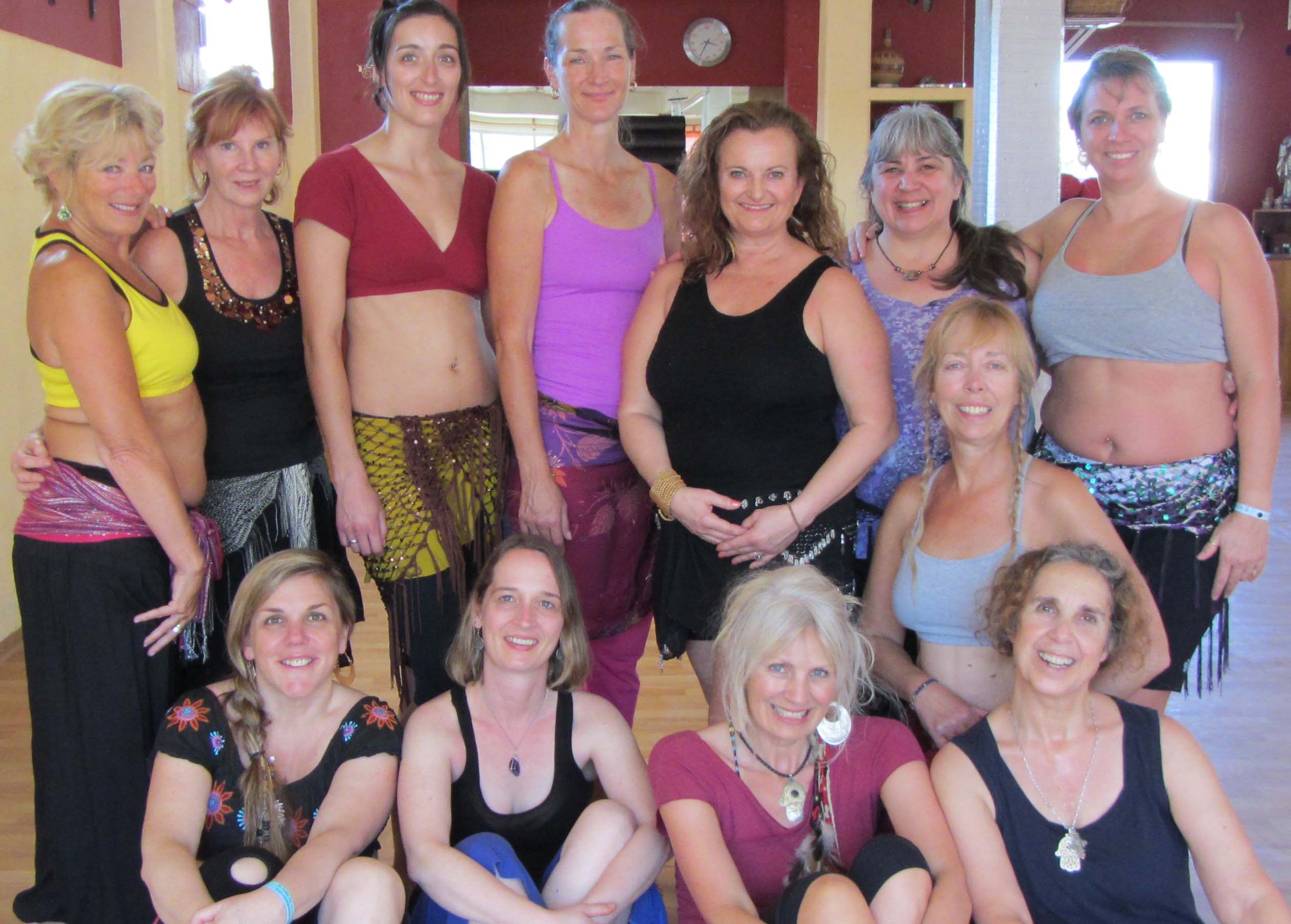
Five days of dance and sun in the Yoga Vallarta studio of Puerto Vallarta, February 5 – 9 2013. Thanks to my co-instructor Debra Shields of Saidi Sisters, the beautiful dancers who attended, Alma our studio host, and the restaurants that welcomed our evening dance parties!   See our Facebook site Dance Vallarta 2013 for photos and video links.


Fall classes with Lynette – 2012 – downtown Nanaimo

 Art of Middle Eastern Dance – Tuesdays  starting October 16 – 

Explore the joy and artistry of Middle Eastern dance in weekly multilevel classes with a masterful instructor/performer. This fall Lynette will strengthen your technique and movement vocabulary, while deepening your understanding of traditional styles and contemporary approaches to Turkish, Arab and fusion dance. Develop confidence in improvisation and dance-making through games, exercises and group dances.

Bellydance Basics –  2 Tuesdays  Oct. 2 & 9  

An introduction to the fundamentals of bellydance. Join experienced instructor/performer Lynette to learn basic moves and isolations, popular Middle Eastern rhythms, and the joyful essence of Middle Eastern dance. Bellydance provides a gentle total body workout that builds grace, strength, and flexibility – while having fun! Classes take place in the spacious Omtown Studio, and are suitable for a range of ages and abilities.  These sessions are designed for beginners or dancers who wish to renew & refresh their basic skills.  After these two sessions, beginners will be ready to participate in multi-level classes.

Where:  Omtown Yoga, 43 Commercial St., downtown Nanaimo www.omtown.ca (park on the street or around the back, off Terminal Ave)

Turkish Roman music/video

Music from my past workshops

All cd’s listed here are available on Amazon.com, some through Chapters Indigo, and one from iTunes.  All of them are terrific!

Performed by Turkish Roman (gypsy) musicians:

Selim Sesler  – Road to Kesan: Turkish ROM & Regional Music Thrace       track: Tulum 5:01

Selim Sesler and Brenda MacCrimmon – Karsılama    tracks: Daracik Sokaklar 5:29 and  Karcigar Köçekçe 1:55

Ahmet Kusgoz Ve Arkadaslari  – Gypsies of Turkey   – also available through iTunes –  track: Tulum Roman Havasi 3:06

Mustafa Kandirali –  Caz Roman   track: Mastika 7:19

Popular Turkish Roman tunes performed by non-Romani Turkish or Turkish-Canadian musicians:

Minor Empire  –  Second Nature    track: Yuksek Yuksek Tepeler 4:42  ( Leah, Kalina, and I performed to this track in Victoria’s Bellydance Showcase Hafla)

Candan Erçetin – Aman Doktor    track: Cadirimin Üstüne/Sürüverin Cezveler Kaynasin 4:23  (I didn’t play this during the workshop, but it offers another dynamic interpretation of a popular song)

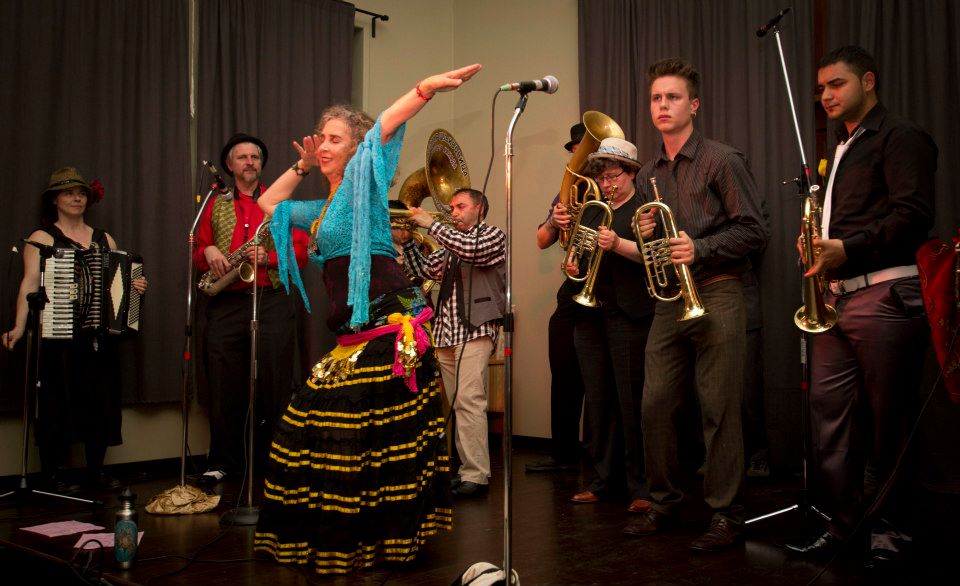
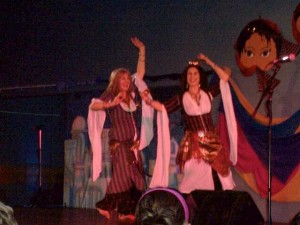
Kalina, Lynette, and Leah perform at OPA’s Bellydance Showcase, Victoria September 2012

Youtube videos of Turkish Roman dance worth watching

I wish I’d been at this village wedding in Turkey!  Fortunately, the video is very clear, aside from the extra digital effects:  http://www.youtube.com/watch?NR=1&v=4eIPhZ_g8Xk&feature=endscreen

My current favourite Roman dancer. I’m inspired by her expressive face and gestures, and the underlying structure of her performance. It looks like the same wedding and videographer as above:  http://www.youtube.com/watch?feature=endscreen&NR=1&v=wCTiViIr1xg

A very different venue, two dancers, two distinct personal styles:http://www.youtube.com/watch?v=7sXnk3ATd9g&feature=related

A dynamic male dancer, presenting Roman dance at a Hidrellez festival in Turkey – a virtuosic solo turns into a delightful duet!  http://www.youtube.com/watch?v=lLPtt2KsOT4 

Brief clips of social dancing at Hidrellez celebrations around Turkey.  http://www.youtube.com/watch?v=hn909jWv0k4

ANTH 112 Introductory Anthropology

Fall 2012   Cultural Anthropology

Nanaimo: 8:30 – 11:30 am Fridays         

Cowichan 10:30 am – 12 noon Mondays, Wednesdays   

Instructor:  Lynette Harper, Ph.D.

Email: Lynette.Harper@viu.ca

Anthropology can be divided into four subfields: physical/biological anthropology, archaeology, linguistic anthropology, and cultural anthropology. This course focuses on cultural anthropology—examining the nature of culture, the many social institutions that make us human, culture change, and anthropology in a globalizing world.

Instruction includes lectures, films, class discussions and cooperative activities.  Evaluation will be based on:

  • Participation  (5%)
  • Reflective notes (20%) due throughout term
  • Midterm quiz (20%)
  • Subsistence & Economics presentation (5%)
  • Kinship assignment (20%)
  • Final take-home essay exam  (30%)

Required text:  

Haviland, William A., Harald E.L. Prins, Dana Walrath, and Bunny McBride.  2011. Anthropology: The Human Challenge, Thirteenth Edition.  Belmont, CA: Wadsworth/Thomson Learning.   (Note: Twelfth Edition may be used, though page numbers differ.)

Weeks 

Topics, quizzes & assignments due

Readings &

Assignments due

Week 1 Introductions, Anthropology & Four Fields, -Video: Everybody’s ethnic: Your invisible culture   GN 357 E94 2001 Read Chapter 1(read after class)
Week 2 The culture concept, Video: Sacred Geography (45 min.) Light at the edge of the world series GN 320 L54 2009 Chapter 14
Week 3 Ethnographic Research, Video: How cultures are studied, 30 min GN 316 F3 NO.03 Chapter 15
Week 4 Learning culture, Language and Communication, Video: First Voices Excerpts from Ch.16 & 17
Week 5 Sex, Marriage, Family – Video: Saheri’s Choice, 27 min. HQ 670 S33 1998 Cowichan Campus Library Chapter 20
Week 6 Social organization: Kinship – Gender, age, interest, class – Optional Video: Arab diaries, 30 min Chapter 21
Week 7 Midterm quiz – Video: Paris is Burning, 76 min. PN 1997 P37 1992 Chapter 22 (read after class)
Week 8 Social identity, Subsistence & Economics systems – Video: Potlatch, 22  min E 78 C2 F5.77 # 3 Presentations due – Excerpts from Ch. 18,19
Week 9 Processes of change – Video: N’ai: story of a !Kung woman, 58 min DT 1058 K86 N32 2004  Chapter 26
Week 10 Politics, power, and violence – Video: Raised to be heroes, 40 min. UB 345 I75 R35 2006 Kinship essay due Chapter 23
Week 11 Power / change, Global Challenges, Local Responses – Video: Hunters of the Northern Ice, 45 min. GN 320 L54 2009 Light at the edge of the world series Excerpts from Ch. 27
Week 12 Arts or Religion & Spirituality – Video: TBA Excerpts from Ch.24 or 25
Week 13 Class review & wrap-up, Final take-home distributed
Dec. 10

Final take-home essay exam due. Paper copies to 356-374, or drop box beside office 356-310. Exams may be emailed by advance arrangement.

Evaluation & assignments

  • PARTICIPATION (5%)

Attendance: Students are expected to attend all scheduled classes. Please notify the instructor in advance if you need to miss a class, in advance if possible. In exceptional circumstances (e.g., verifiable ill-health) it will be possible to make up the Reflective Note mark by special arrangement.

Participation in class activities:  Do your reading BEFORE class begins. Come prepared to discuss the required readings. We all learn from exchanging ideas in the classroom, as well as from independent reading and analysis. You will complete a self-evaluation of your participation during class.

  • REFLECTIVE NOTES (20%)

During most classes, you will be asked to handwrite a reflective comment based on a required reading, video, lecture or class discussion.  The instructor will assign topics for each Note, to be handed in at the end of class.

Notes should NOT be simply a summary of information. For a good mark, be reflective and explain your opinions.  If possible, incorporate anthropological ideas from class and your textbook.  Your notes provide an opportunity for us to communicate directly, providing me with a better sense of what you are gaining from the course.  I will always read your notes, and sometimes respond with written comments.

Please date and sign each Reflective Note with your first and last name.  Notes will usually be returned within a week.  Proper grammar and spelling are appreciated, though this will not affect your grade. You may hand in loose pages or a notebook. If you submit all 12 notes, you will automatically receive 12/20 marks.  The remaining 8 marks will be based on quality and effort.

  • GROUP PRESENTATION (5%) 

You will be assigned a topic with 2-3 other students, and given time in class to prepare a brief (5 minute) summary of one mode of subsistence or economic system described in the textbook, including its implications for social organization. Marks will be earned by demonstrating good organization and accurate understanding, providing good explanations and examples, and using visual aids (eg. blackboard or flipchart paper).

  • KINSHIP ASSIGNMENT GUIDELINES (20%) 

The purpose of this assignment is to explore ideas of family and kinship, kin terminology, and kindred. It consists of three parts: A. Kinship diagram; B. Kindred diagram; C. Essay Further explanation and discussion of this assignment will take place during Week 6.

A.  Kinship Diagram

Although we all have family relations, kinship terms may differ dramatically from society to society: eg. the person you call “uncle” may be called “father” elsewhere/in another language.  Collect family data for three or four generations if possible, and use it to produce a kinship chart (more commonly referred to as a genealogy or family tree by non-anthropologists). You may not be able to acquire complete information about every person in your family; just get as much information as possible. Focus on collecting the following:

  • Økin terms commonly used in your home community, in whatever language(s) are used (eg. aunt, uncle, nana, oma, papus, yaya, tati, cousin, etc.)
  • Ølast names if possible, including women’s “maiden” names if known

Remember to note “ego”, and to use standard kinship notations used by anthropologists.

Once you have collected the information you should begin to organize your diagram. It is best to start in pencil, as you may find that it takes a while to organize the diagram in a clear and easy to “read” fashion. Place the oldest generation at the top of your diagram. Please use regular paper (letter or legal size); tape two sheets together if necessary.

Bring any diagramming problems you encounter to class, or see me privately and we’ll work on possible approaches together. If you would prefer an alternate assignment, please come and see me.

B.  Kindred Diagram

On a second sheet of paper, draw a similar chart using standard anthropological notations, but include only your kindred. Instead of kin terms, indicate first and/or last names, including women’s “maiden” names if known. If both charts are almost identical, you could start with a photocopy the kinship chart.

C. Essay (approximately 4 pages typed double-spaced)

Your essay will reflect on the process of researching your family history.  Possible topics are: what family means to you, how and why your kindred differs from your kinship diagram, an analysis of your family e.g. common patterns you see reflected in your diagram, and/or an analysis of difficulties encountered when researching your family. Use at least two anthropological themes or concepts from class ie. kindred, marriage patterns, enculturation, etc.  You may write about family stories or a biography of a person in your family, as long as you integrate anthropological concepts.  (Note: Essays longer than the specified length are welcome!)

Evaluation criteria 

  • meets all assignment requirements, including both diagram and essay;   
  • diagrams tidy and easy to read
  • well organized essay, presenting content clearly and effectively; 
  • well explained using research data (may include interviews, etc.)
  • demonstrates accurate understanding of course materials, and application of anthropological concepts from class & readings when appropriate
  • if possible, raises questions and/or describes cultural values and beliefs
  • essay is clear and easy to read (well organized, grammar and spelling do not detract from meaning), 

Vancouver Island Bellydance Showcase

Saturday September 22, 2012 – Victoria-based OPA society celebrated the very best in our Island bellydance community!  Among the 6 mini-workshops, I taught a session on Turkish Roman dance.  I’ve listed some of my music resources and video inspirations in the Resources page “Turkish Roman workshop music and videos”

Workshop Descriptions:
10am -‘Layering Drills for Refined Technique’ with Candace Sanchez
Come on out and get your sweat on! Learn what muscles create what movement and how to implement different foot patterns with those movements. You will start the breakdown process of how to make multiple movements happen all at the same time.

11am -‘The Science of Shimmies’ with Pamela Ball
Technique to relax, ground and layer your shimmies while stationary or travelling for “shimmies that shine.”

12pm -‘Flamenco Fusion’ with Shari Nakagawa
This workshop will introduce flamenco arm and hand patterns, marking steps and skirt technique. Combinations will be taught to demonstrate how to layer this over bellydance hip movement. Be sure to bring a long skirt with you!

2pm -‘Kalbelia Sapera’ with Cathy Stoyko
Also known as Rajasthani ‘gypsy’ dance, this workshop will give you an introduction to this traditional folk dance from the Northern Indian state of Rajasthan.

3pm -‘Turkish Romani Style and Movement’ with Lynette Harper
Experience the vibrant, earthy Turkish style of Romani dance. Learn distinctive moves and phrasings that complement the sensuous and expressive qualities of Romani music – and may be blended with your own bellydance style.

4pm -‘Zills, Drills & Combinations’ with Bobbie
Since Egyptian style bellydance has increased in popularity over the American Cabaret style of the 1970s, playing finger cymbals has become somewhat of a lost art. At this workshop, you will learn some basic zill patterns beyond the “gallop,’ and coordinate those patterns with movement combinations.

Evening hafla featuring the workshop instructors and local dancers!
Doors at 7:30; Show at 8:00
Pay at the door:   $5 for OPA members; $10 for non-OPA members

Registration forms available at www.OPAsociety.com
Questions? Want to perform? Want to vend? Email info@OPAsociety.com

Penceresi yola karsi

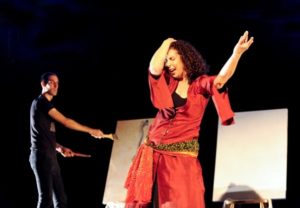
Her window faces the street”, presented in Belly for the Beast, Malaspina Theatre, Nanaimo BC.

This structured improvisation explores the public and private feelings of a Turkish girl, set to the Turkish Roman music of Karsilama (with Selim Sesler & Brenda MacCrimmon).

Red Apple

Excerpt from Red Apple, presented in Errington, BC.

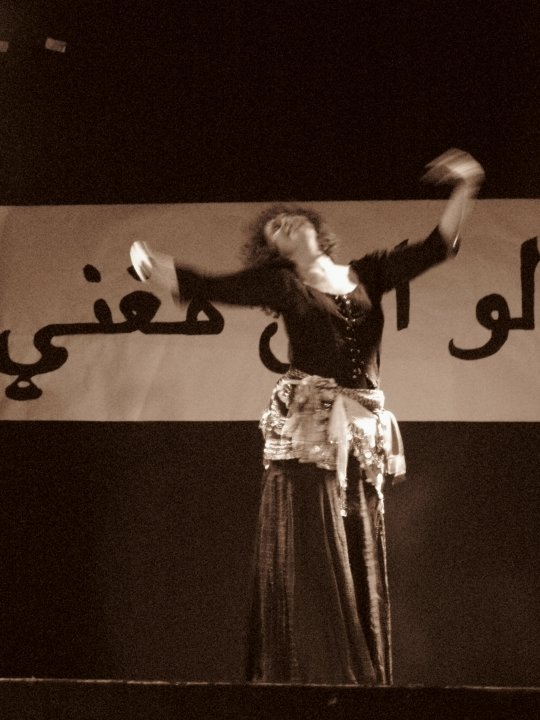
This choreography was inspired by the resilience of Afghani village women.  The structured improvisation blends eastern and western traditions and contemporary dance styles to music by Ashkabad and Yuldiz Usmanova.


Smokin’

“Light a cigarette and to hell with the world!”

This choreography blends Roma dance improvisation with western contemporary dance and “gypsy” stereotypes. Inspired by the 3 Mustaphas 3 version of Anapse To Cigaro.


Bekaa Valley Girls

Several excerpts from Bekaa Valley Girls, Lynette’s full-length collaborative creation with Rahma Haddad, presented in the Noon Dance Seriesat Vancouver’s Dance Centre, November 2009.


Duet with Rahma Haddad (part 1)

This segment recalls when Lebanese cousins Lynette and Rahma first met.  Though raised in different parts of Canada, they shared a family history of immigration and a deep love of dance.

Duet with Rahma Haddad (part 2)

This excerpt from Bekaa Valley Girls continues from Part 1.  Rahma presents Lynette with a hipscarf, and introduces her to belly dance.


Gnossienne

In this excerpt, Lynette wonders if she has missed something in her western dance training.


Turkish dance workshops

Turkish Roma (gypsy) dance

Celebrate the passionate and dynamic rhythms, movements, and spontaneity of Turkish Roman/Gypsy dance. Distinctive steps and sinuous movements will provide a base for exploring ornamentation, layering, and expression. Learn the meanings and role of gestures, experiment with a wide range of musical moods, and develop some powerful gypsy “attitude”.  Teaching level: Multilevel, some dance experience recommended (novice through advanced levels)

Turkish style: Oryantal and Roma dance

Compare  the earthy Turkish style of Romani social dance with performance-oriented Oryantal stylings. Learn distinctive moves and phrasings that complement the sensuous and expressive qualities of Romani music, and  innovative approaches used by Oryantal dancers. Teaching level: Multilevel, some dance experience recommended (novice through advanced levels) Length: 2 or 3 hours

“Let me tell you exactly what inspired me! I have always thought of Turkish music as a bit fast and somewhat chaotic but you made me see a totally different side of it, how grounded and earthy it really is. And how it can lend itself to flowing movements. ” 

(Anita Hoffman, Victoria, 2007)

VIVA ROMANI ! ! ! (Go Gypsy)

A daylong workshop exploring the passionate and lyrical stylings of Turkish Roman dance.

Part 1 Turkish Roman (Gypsy) Basics Learn expressive movements to 9/8 and 4/4 Turkish rhythms. An inspiring intro for beginners, a refresher for intermediate, advanced and experienced dancers. Length: 2 1/2 or 3 hours

Part 2 Turkish Jaz Focus on improvising and crafting dance to match the dramatic flair of Turkey’s master musicians Mustapha Kandirali, Burhan Ocal and others. Refine, expand, and elaborate on Turkish Roman techniques and ideas. Length: 2 hours  (4 1/2 hours for both workshops combined)

Romani dance workshops

Ghawazee Sparkle & Turkish Soul

A short introduction to movement in two distinctive Roma styles. Strengthen your dance vocabulary, skills, and knowledge in a session contrasting the sinuous embellishments of Turkish dance styles with the quivers, shimmies and “earthquake tremors” of Egyptian Ghawazee dance. Read review. Teaching level: Multilevel (beginner through advanced) Length: 1 1/2 hours

Arab dance workshops

TARAB – Arab music and spirit of the dance

Explore the soul and vitality of Arab music as inspiration for dance improvisation and choreography. Teaching level: Multilevel; works well for mixed levels beginner through advanced. Read review. Length: 2 or 3 hours

From Countryside to Cabaret: Egyptian Saidi and Raqs Sharqi styles

Build your technique, movement vocabulary, and understanding of two popular Egyptian dance styles. Discover the links between the informal village dances of Saidi, and the performance-oriented precision of glamorous Raqs Sharqi dance. Teaching level: Adaptable to any level, or multi-level teaching.  Length: 2 to 5 hours.

Zar: Dancing with Spirit

Zar is a type of spirit, an illness caused when spirits possess humans, and a ritual conducted to pacify the spirits. For Arab women, zar is not an exorcism but a way of “realigning” their daily world with the spirit world. Learn about the zar and its rituals, then explore traditional zar movements and their creative possibilities for dance performance. Options: May be accompanied by a lecture and a-v showing, and/or a folkloric dance choreography with the Egyptian song “Salamit’ha Um Hassan”.  Teaching level: Multilevel.  Length: 1 1/2 for basic introduction, movements, and simple choreography. Up to 3 hours with additional options.

Improvisation, skills and technique workshops

Discover the joy of dancing in the moment. Develop your confidence and skills in movement, improvisation and creating choreography with techniques and exercises to expand your range of movement and expression in both traditional and currently popular dance styles.

Sample topics, appropriate for multiple levels:

Improvisation and Expression – Warm up with basic improvisation techniques, and develop your repertoire with improvisation strategies including: working with combinations, dance steps and techniques; creating dance phrases and combinations; shaping dance; dynamic energies; and traditional dance vocabularies. Learn techniques that will help you LET GO in your dance!

Enhancing Your DanceBuild on basic dance and improvisation skills by exploring inflections of mood and texture; creating coherence and meaning in your dance; working with symbols, characters and imagery; respecting regional styles; and more inspirations for dancing solo and with others.  Teaching level: Multilevel for students, dancers, and teachers.

Phrasing – Construct sequences of movements that create dance phrases, the “building blocks” of improvised dance and formal choreography. Develop your ear for Arab music phrasing, learn and experiment with short movement sequences, and use them to construct longer dances

Dance is in their blood


Gilded Serpent June 2007         

by Kevin Potvin

A reluctant visitor to a multicultural arts show comes away with a new appreciation for how art entwines with ordinary life for ordinary people. . . . (click here to read article)

Excerpt: That doesn’t mean I don’t understand dance at all – as a form of art done by artists, or as an activity people do at clubs.  Haddad presented a different thing I had previously bean unaware of, and it bridged the two forms – art and popular pastime – to form a third distinct thing: popular art, or folk art, in dance form.  This was no contrived presentation of foreign exoticism to satisfy some state-granting agency looking to spice up multicultural awareness week. This was a moving and utterly personal expression given in so highly evolved a form, it appeared to be fully grounded in the Earth.

It was Lynette Harper’s talk and performance that, though it came first, served to wrap up the whole of the noon hour’s entertainment–which was fitting since she organized this show. Harper spoke in general terms of how belly dancers share their dances with each other, and how they get caught up in each other’s pleasure of dancing. “At any gathering,” she emphasized, “there was always dance; it was loved and honoured.” . . .
(previously posted in The Republic of East Vancouver, April 2004)

(See short clip “Arab Women Arab Dance” in Video section)


Lynette Harper Workshop Review


OPA! News, Victoria Spring 2008

by BOBBIE BARRY

Lynette is the quintessential teacher. After 30 years of teaching and performing this art form, she knows her stuff!

My first meeting and experience of Lynette Harper as a teacher was back in July 2003.  At that point I had been studying Middle Eastern belly dance for a year and a half.  My first teacher and Mentor, Pamela Ball asked Lynette to travel down from Nanaimo to do a workshop with those of us who had fallen under the thrall of this beautiful dance form.

Pamela told us we were in for a treat and a treat is what we got.  Though I still consider myself in the toddler stages of my study of this dance, back then as a baby dancer, I remember being very nervous taking a class outside the comfort zone of my own teacher’s methods and style.

But not to worry.  Lynette is the quintessential teacher.  After 30 years of teaching and performing this art form, she knows her stuff!  And without being overbearing or forcefully opinionated, it is clear that she expects you to continue your own education if you are a seriously dedicated student.  On the other hand, she is encouraging, supportive and very generous with her knowledge and skill towards those of us who are still in the learning process.

My first experience of Lynette as a performer was in that same workshop back in July 2003.  It was exciting to see her earthy, confident Rom style!  Since then I have seen Lynette perform other styles of dance at various events and venues around the Victoria area.  I always enjoy her wonderful stage presence.  Whether, celebratory, playful, introspective or any myriad of other moods, I always find her performances fresh and in the moment.  She is always genuine for the audience and I love that in a performer.

So with that in mind, I eagerly looked forward to another fun, informative and expressive  day on December 1st.

The workshop was held at the Pro Patria Legion.  First, let me say it was a really nice venue.  Nothing fancy but easily located with plenty of accessible parking (I live close by so that was an added bonus), with a Tim Horton’s and a few other restaurants within walking distance.

We started the “Raqs Sharqi” morning workshop by warming up with folkloric steps and movements.  This not only served to get us moving and the blood flowing but gave us a base from which to discuss the origins of Raq Sharqi (Oriental dance).  From there we began to refine those steps, form them into combinations and add more detailed arms and hands.  We discussed and implemented intention in our movement – being aware that the just-for-fun, spontaneous social aspects of the Beledi (country) dance becomes more intentional, elegant and stylized as it moves towards engaging and entertaining an audience in the classical and modern styles of Oriental dance.

We ended the morning by learning a small portion of a Randa Kamal choreography as taught at the 2007 International Bellydance Conference of Canada.  It certainly was a lesson on the innovative modern Egyptian style developed by Randa – showing that this dance is certainly not static!

After the short lunch break we reconvened for the “Turkish Inspirations” afternoon portion of the workshop.  This was the portion in which I was particularly interested as I feel that my own personal style leans more towards American Cabaret that, in the past, borrowed heavily from Turkish music, styling and costuming.

In this portion we discussed “earthiness” and “airiness” – how we might flow between the two energies and where we feel our personal style lies along the continuum between the two.  Lynette even had us place ourselves along an imaginary line between “earthy” and “airy.”  That was a very interesting and profound moment.  Some dancers’ perception of their particular place on the continuum was not how they were perceived by the other students!  Food for thought there!  We spent some time paying particular attention to hands and emotion.  We also discussed, practiced and experimented with spins, pauses and poses at various speeds and levels.  These provide that dramatic flair that, to me, is characteristic of Turkish style and which gives such rich texture to a performance (though it is, of course, present in other styles as well).

Though we followed Lynette’s direction and instruction, she also gave time and room for improvised expression.  For me, this is the essence of Middle Eastern dance.  Learning choreography and combinations are fun, useful and, for me, a necessary way to hone technique and transitions beyond the drilling stage.  However, just as each person is unique, expression through dance is also unique.  Each dancer must be able to come to a point where she/he is able to translate what the music is saying to her/him.  Lynette’s teaching never loses sight of this important truth and she always makes room for even the least experienced and proficient dancer to begin to find that individual expression.

Lynette ended both sessions with a stretch and emphasized throughout the day to modify movement or use similar but different movement to accommodate existing personal physical injuries or conditions.

In addition, the music used was excellent and made available by mail to those who wished to purchase.

My only suggestion goes to OPA not Lynette:  I was very happy to pay for and attend the full day workshop.  However, I did have a few people mention to me that they would have liked to attend either the morning or the afternoon sessions because personal commitments did not allow for freeing up an entire day.  I know it’s a lot of work to put on any function and have it run smoothly and successfully.  When all is said and done it’s nice to see that hard work pay off in attendance and participation.  Perhaps providing the option to pay and attend only one of the sessions would have seen a few more people at these most fun and informative classes.

Having one of Vancouver Island’s own teaching a workshop was a great way to celebrate 10 years since OPA’s inception.  A BIG thank you to Lynette and OPA.


Queen of Wands


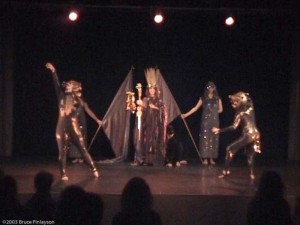
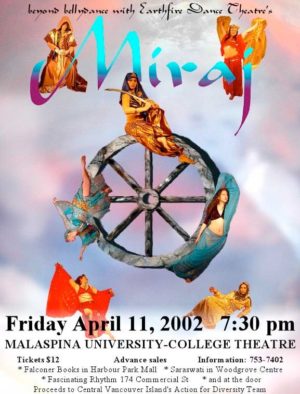
Excerpt from MIRAJ at Victoria’s 2003 Fringe Festival, a full-length dance theatre production created and performed with Earthfire Dance Collective.

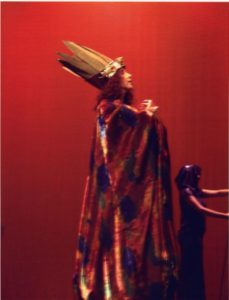
In this segment, the Queen of Wands (Lynette) loses her crown and other trappings of power to her cat (Taissia), and discovers an inner strength.

Damask Rose Revue 2

A fantastic show featuring guest artist Tamlyn Dallal! I am thrilled to be invited to perform with some of Vancouver’s finest: Al a Nar, Aviva & Megan, Carla, Laura, Leona, Lisa, Lynette (that’s me), Maki & students, Michelle, nina d., Tamara, Tha Fae, The Phoenix Dancers, and the magical musings of Rakkab

Saturday July 7, 2012

St. James Hall, 3214 West 10th Avenue, Vancouver

Tickets info@nina-d.com or call 604-240-7387.

Interview with Lynette Harper

Sahda,  June 2007 By NILA 

What attracted you to bellydance, and made you stick to it?

Dance is life! Returning home from a Middle East journey in 1976, I discovered the bellydance craze had hit Vancouver – and knew I’d become part of it. Sometimes I wonder if I would have stuck to Middle Eastern forms if I wasn’t Lebanese, since their stylistic conventions often feel like constraints. But there’s an enormous power in the traditional forms, and they can lead us to diverse avenues of expression and experimentation. I find new stuff emerging from the Middle Eastern/European music scene is terrifically inspiring!

Do you have a favorite style/styles to dance?

Yes, many! I’m still swept away when dancing with Turkish Roman (gypsy) music, inspired by its virtuosity, free and spontaneous improvisation, rich melodies and that romantic, emotional sensibility. These are qualities I value in dance! I enjoy improvising in Turkish styles, but I also revel in distinctive traditional forms: the sparkle of Ghawazee shimmies, the ‘mathematical’ precision of raqs sharqi, the intensity of zar ritual movement. Right now I’m developing a Saidi dance ‘persona’ – going beyond my current understanding of the earthy, flirtatious and sensuous movements of the Saidi, to acknowledge my aging body and incorporate some of that wisdom I’m supposed to be gaining!

How did Earthfire come about?

Serendipity! A convergence of women with fabulous dance talents and stage presence, in a small B.C. town. Swimming after rehearsals, striving for shared goals, respecting each others’ abilities and artistic visions. It all came together when Signy Cohen, of Tofino, asked me if I knew some dancers who could put together a show for their summer festival. Six weeks of intensive rehearsal later, an ensemble was born! The name came later. Though we now live in different cities and countries, we still dance together any chance we get!

Excercise form you recommend to keep in shape for the dance.

Dance warm-ups, strengthening and stretching exercises from a range of dance forms are useful! I try to keep up with exercises developed by contemporary dancers in particular, since they emphasize incredible strength and flexibility. There are so many options to explore – right now, when my research work keeps me sitting at a computer most of the time, I’m finding the intensity of Pilates Reformer work provides a nice balance with Middle Eastern dance.

Who is your favourite all around dancer?

Every dancer that is caught up in the joy of the dance, who is able to lose herself in movement and music.

Recommended reading

Books I find myself returning to: Nine Parts of Desire by Geraldine Brooks (readable insights into the complexities of women in Islam); Serpent of the Nile by Wendy Buonaventura (solid historical background of the dance, with great pictures); Skinny Legs and All by Tom Robbins (catches the essence of the dance – and it’s a great read!); and The Creative Habit: Learn it and use it for life by Twyla Tharp (inspiration from one of the great contemporary choreographers of our time) For a nice light read, Keti Sharif’s Bellydance book is terrific; and on the other end of the scale, Dancing fear and desire by Stavros Karayanni provides a sharp postcolonial analysis of dance and identities.

What are your plans for this year/what should we look out for?

So many plans! The highlight of my dance year is the Island Dance Retreat in August, spending 5 days dancing with women from all around B.C., eating Middle Eastern food, working and laughing a lot. This year Bronwyn and I have developed ideas about symbolism to integrate in our team teaching. I also plan to finish my doctorate this fall, so that I will have more time to spend teaching, creating & performing dance – and to visit former Earthfire dancer Ferda at her home in Turkey!


ANTH 390D Arab Women in the Middle East and Diaspora

Anthropological perspectives   (offered May 2014; tentatively scheduled May 2016)

 Lynette.Harper@viu.ca

A veil of mystery and stereotyping obscures Arab women’s lives in the Middle East and the global Arab diaspora. This course investigates Arab women’s dilemmas and perspectives on identity, faith, politics and representation through readings and discussion based on ethnographies and cultural studies. Examine gender/power relations in Arab cultural contexts in the Middle East and diaspora; rethink Orientalism; explore diverse voices, hybridity, modernity, community, tradition and contemporary media.

Possible textbooks:

Adely, Fida. (2012). Gendered paradoxes: Educating Jordanian women in nation, faith and progress. Chicago: University of Chicago Press.

PLUS ONE Optional ethnography, to be assigned:

Abu-Lughod, L. (1999). Veiled sentiments: Honor and poetry in a Bedouin society. Berkeley CA, University of California Press.

Abu-Lughod, L. (1993). Writing women’s worlds: Bedouin stories. Berkeley CA, University of California Press.

Deeb, L. (2006). An enchanted modern: Gender and public piety in Shi’i Lebanon. Princeton, Princeton University Press.

Fernea, E. W. (1969). Guests of the sheik: An ethnography of an Iraqi village. Garden City NY, Doubleday & Company.

Tarlo, E. (2010). Visibly Muslim: Fashion, politics, faith. New York, Berg

DRAFT ONLY:   Sample of past assignments

30% Five Critical Responses to class videos, textbook chapters and articles

Your Responses should be more than summaries or descriptions. Critically examine and comment on each video or text, noticing biases and assumptions in your own analysis as well as in the video or text itself.  Be reflective and support your opinions with reference to class readings and discussions, anthropological frameworks and/or personal experiences. Each Response should be approximately two pages (typed and double-spaced), and demonstrate your understanding of and engagement with the material.

5% Panel discussion & informal presentation of Assigned Journal Article

15% Team presentation of assigned ethnography
Groups of 5-7 students will collaboratively prepare a presentation on an assigned ethnography to the class. Time will be provided during class for team preparation.
Your team is responsible for teaching the book to the rest of the class. A group mark will be awarded based on instructor, peer, and self-evaluations.

20% Critical Essay on assigned text       

This assignments has two objectives: to allow you to explore significant themes and ideas in greater depth, and to develop and demonstrate your ability to critically read and analyze an ethnography. Your analysis should be well supported by evidence from multiple sources.

20% Final open book essay exam (take-home or  in- class option)

Write two short essay responses to questions selected from the provided list.  You may bring books, articles, and notes.  No computer or digital devices are permitted, except by advance permission of instructor.

10%    Class participation and attendance    

Participation marks will be based on your attendance and contribution to class discussions and activities. Although a small portion of your final mark, if yours is a borderline case this could be a letter grade difference.  The starting point for your participation mark will be your current class average; the quality of your participation has the potential to raise or lower your mark a letter grade (e.g. from B+ to A- ).

Required readings must be read before class. Everyone should come to class prepared to discuss the assigned readings. Students are expected to attend all scheduled classes, and to actively participate in class discussions.  If you must miss a class, please try to inform the instructor BEFORE it begins.


Unveiled: Performing identities in the Arab diaspora

Bellydance AtW book cover

On Canada’s west coast, a large and active bellydance community has grown and thrived distinct from Middle Eastern ethnic communities.  Orientalist fantasies and Egyptian stylings regularly appear onstage alongside western tribal and other ethnic bellydance fusions.  These performances do not challenge popular media stereotypes about the Middle East; they comfortably coexist with ideologies linking veiled Arab women with oppressed victims of patriarchy and war.  So how do Arab women immigrants and their descendants experience and negotiate issues of identity and representation within the bellydance community?  Do they resist or reinscribe notions of difference, authenticity, traditionalism, contemporaneity?

In 2010 & 2011, I conducted ethnographic interviews with Arab women who belly dance. Their narratives reveal the strategies and tensions of negotiating social identities within west coast bellydance and ethnic communities.

Findings are now available in an academic publication of belly dance research, Belly Dance Around the World: New communities, performance and identity, in the chapter titled   Arab/Other: Performing identities on Canada’s west coast.


Arab Women, Arab Dance

Raks Araby Kevin colourWhen most people think of Arab music and dance they usually think of bellydancing, the North American dance craze based on an ancient tradition. These two presentations at Vancouver’s Dance Centre (2004 & 2005) provided a personal and cultural context for understanding the dynamic and evolving art of Arab dance.  Five diversely accomplished Arab women, well known as teachers and performers, explored their dance form through words and movement.  We revealed the meaning of Arab dance as art, cultural expression, and source of personal identity.

Each of the presenters has a unique history, their origins reflecting the diversity of the Arab world and the Arab diaspora. During the first informal event in 2004, Salma Ferchichi, Rahma Haddad, Lynette Harper and Rabab Ward spoke about self and identity as it relates to their Arab dance teaching and performance.  The following year, 2005, Emily Basha joined the group.  OOn both occasions, our words were accompanied by short performances, and a group improvisation that conveys the joyful social dimension of Arab dance. In 2005, co-organizer Rahma Haddad produced a series of dance workshops featuring all five presenters.

These events integrated masterful professional performances of diverse Middle Eastern and North African dance styles with insightful personal narratives. They were a first for the B.C. dance community – and perhaps for Canada – in presenting Arab perspectives about Arab women and their dance.  The 2004 performance was reviewed in Vancouver newspaper The Republic and Gilded Serpent.

Press Release from the Dance Centre, 2004


The Dance Centre presents 

The Noon Dance Series

Raks Araby – Arab Women, Arab Dance

With Salma Ferchichi, Rahma Haddad, Lynette Harper and Rabab Ward

Insightful narratives with masterful performances of

Middle Eastern and North African dances

Friday March 26 2004 at 12 noon

Scotiabank Dance Centre, 677 Davie St (at Granville), Vancouver

Tickets $7 at the door Info: 604 606 6400 www.thedancecentre.ca

Followed by a tour of Scotiabank Dance Centre at 1pm

The monthly Noon Dance Series continues with a unique and stimulating presentation of Middle Eastern and North African dance forms, by four diversely accomplished Arab women. Salma Ferchichi, Rahma Haddad, Lynette Harper and Rabab Ward go beyond the popular preconceptions of bellydancing, to reveal Arab dance as a dynamic and evolving art, means of cultural expression, and source of personal identity.

During this informal event Salma, Rahma, Lynette and Rabab will speak and perform, exploring self and identity as it relates to their Arab dance teaching and performance.  Their aim is to facilitate new understandings about the vitality of dance in the lives of women of Arab origin in Canada, and to challenge audience preconceptions about both Arab women and bellydancing.

April Point Retreats, Quadra Island BC

2013 Dates TBA – Gypsy Spirit Dance Retreats with Lynette

at April Point Resort & Spa on Quadra Island (3 hours north of Victoria) –

Discover your “gypsy spirit” with Gypsy (Romani) style bellydance. You’ll quickly learn the basic moves to passionate music and lively rhythms.  Celebrate the informal spontaneity of traditional Romani dance styles from Turkey, Spain and Egypt, with distinctive steps and sinuous movements you can blend with any other dance style.  This workshop blends bellydance warmups and fundamentals with Gypsy/Romani dance to provide a gentle total body workout that is easy on your joints, increases flexibility – and is a lot of fun!

This multilevel class is designed for beginners to intermediate levels – or teachers/performers who wish to expand their repertoire.

About April Point Resort & Spa

April Point Resort & Spa is an island getaway away from the crowds, featuring the elegant yet laid back atmosphere of the west coast. Enjoy wildlife tours, kayaking, fishing, spa treatments, island tours and sumptuous meals, all enhanced by the stunning natural beauty of Discovery Passage. Guests also enjoy the amenities of Painter’s Lodge in Campbell River, connected by a complimentary scenic water shuttle. For reservations or more information, please call 1-800-663-7090 or visit obmg.com.

*****************************************************

Past April Point Retreats:  2008 & 2009  

Belly Dancing: The Art of Middle Eastern Dance

April Point Resort & Spa on Quadra Island (3 hours north of Victoria)

Discover the joy of Middle Eastern dance, an art that has inspired and empowered people for millennia. Learn the fundamentals of this graceful, energetic dance in a supportive environment suitable for a range of ages and abilities. This year you’ll learn bellydance fundamentals that merge traditional folk dances with contemporary moves and music; and explore earthy Roma (gypsy) dance, Latin Arabian dances that mix Latin flair with Arab moves, creative dance exercises, and freeflowing dance with veils.  Bellydance provides a gentle total body workout that builds strength, is easy on your joints, and increases flexibility. And, it’s fun too!


DanceAway Mexico


Planning for a 2013 Retreat in Mexico is underway, see the post Dance Vallarta 2013 !

Five days of dance and relaxation in a tranquil seaside village on Mexico’s west coast!  DanceAways in 2010, 2011, and 2012 took place in  La Manzanilla, a small seaside village just 4 hours south of Puerto Vallarta.  DanceAway is an amazing get-away filled with joyful dance in a seaside rooftop studio, evening dance parties, and lots of time for relaxation. Optional day excursions for shopping, swimming, snorkeling, lunch

2012 was the 4th year of holding this super fun and inspirational event. If you love to dance please join us in 2013! Past instructors:

Cathy Stoyko – Bollywood, Bhangra and Indian/Arab fusion belly dance;

Lynette Harper – Turkish, Arab, Romani improv & choreography;

Sheelagh – folk fusion dance; with dance games & exercises that will lead you to be confident and soulful in your dance.

Belly for the Beast 2011

October 1, 2011 – Bellydancers take over the stage at Nanaimo’s Port Theatre!  See fine local bellydance in a proper theatrical venue – while supporting the SPCA. A dynamite show showcasing traditional, folkloric to modern fusions, with touches of flamenco, Romany, contemporary dance – and live music adds depth to several pieces. Applause to Pacifica for creating a show worth mounting at the Port, and inviting many of us to share the stage. This is their 6th benefit for the Nanaimo & District BC SPCA; they’ve raised over $12,000 to date, gaining community support and critical acclaim every year. Past audience members say, “It’s BETTER than the Belly Dance Super Stars!” 

Tickets $25(concession prices available) at the Port Theatre

(I look forward to joining Pacifica in two pieces: the Pacifica choreography “Raks Africa”, and my own new choreography “Veil 3” performed with extraordinary dancers Taissia and Ruth Day,

Traditions, Tribes and Fusions – Nanaimo workshops

May 15, 2011

Dance with Arab Rhythms – LIVE!!!!

Guest drummer Robin Shackleton of Sylvan Temple joins Lynette for a dynamic and energizing multi-level workshop.  We’ve booked a large bright and NEW studio in downtown Nanaimo, to fill with drumming and dance!  Develop your dance vocabulary and music understanding, as we work creatively with beledi and other 4/4 rhythms, lively Egyptian 2/4, and inspiring 8/4 rhythm patterns.  Learn rhythm-savvy combinations, tips for working with drummers, and inspiring ideas for improvisation and your own choreographies. You’re welcome to bring your own drum and finger cymbals!

Where:  ***NOTE NEW VENUE ** Omtown Yoga Studio,  43 Commercial St., downtown Nanaimo   (more parking around the back, off Terminal Ave)

When: 1:30 -3:30 pm May 15, 2011

Fee:     $30 drop-in;  $25 advance registration by email  or phone (250-753-1659)

Silk Road comes to Errington

I look forward to dancing with Silk Road and other Island bellydancers – SATURDAY APRIL 14 – with Cathy  StoyStoyko, Taissia, Taiya, Kalina, and Kirsten! 

Silk Road and Friends at the Errington Hall

Music and Dance from Spain, the Middle East, China and Beyond

April 14, 2011     8pm

Tickets $20      Under 12 – $5 at the door      Under 5 – FREE  Errington Store, Cranky Dog (Parksville), Heaven on Earth (Qualicum Beach)

For the past two decades, Quebecois multi instrumentalist Andre Thibault and Chinese pipa wizard Qiu Xia He (pronounced choo-sha her) have entertained audiences with music that spans the world. Their latest venture into Flamenco music and dance is an indication of their adventurous spirit, and adds to their copious repertoire of songs from China, the Middle East, Brazil, and Quebec.

Andre’s main instruments are a virtuoso accoustic guitar and Middle Eastern oud, a guitar-like lute that was the precursor of the Chinese pipa. Over the hundreds of years that travellers and merchants traversed the Silk Road, the oud arrived in China and underwent modifications that made it compatable with Chinese music. The name “pipa” describes the up and down hand movement, or strumming, technique used to play the instrument. In Qiu Xia’s deft hands, the pipa is adaptable to many different styles of folk music from China to Spain to Ireland to Canada.

In their concerts, Qiu Xia and Andre always develop a warm raport with audiences, engaging them in the music and encouraging their participation. The duo’s delight in performing is matched by their generosity – for the Errington Hall concert they welcome local musicias and dancers into their show. Erringtonian Robin Shackleton will accompany them on percussion and Nanaimo’s Lynette Harper and the Island Belly Dancers will enhance the evening with movement and spectacular costumes.

This world music extravaganza  with Silk Road and Friends promises to entertain, delight, surprise, and dazzle.

Exploring Tarab with Lynette


Spring 2007  OPA! News, Victoria      by Sidona

On February 18th members of Women of Widad piled into a van to take the trip up to Nanaimo to attend a workshop with Lynette Harper. 

 We were excited and all felt that we needed a burst of dance energy after the long winter and also to beat the February blues. When we arrived at the Harbour Dance Centre in Nanaimo we were pleasantly surprised by the sunshine streaming through the windows and bouncing playfully off the hardwood floors. One of the topics discussed was “Tarab” and none of us really knew what that meant.

Lynette started with a warm-up with all of us in a circle facing each other. We moved on to “Turkish Curves” using a smoky Turkish song that really got us into that slow syrupy movement. She started with some examples and then had each of us pick a part of our body to focus on for several minutes. IT was a real joy to explore our inner emotions and combine it with a dance. Lynette promotes dance as a whole woman experience. In her workshops you are pushed out of your comfort zone in a comfortable way. She then did a mini-Ghawazee workshop called “Ghawazee Sparkle”.

The rest of the afternoon was spent on “Tarab” which when translated means “Art is Feeling” or is also described as a “musically induced state of ecstasy”. The dancers were asked to describe what they felt when dancing and words were tossed back and forth like, Freedom, Revitalized, Divine Feminine, Health, In my Veins. We moved energy to different parts of our bodies and explored alone and with other dancers using “light” and “heavy” movements, infectious music and complementary movements. It was a delight and as a group we all felt richer as dancers and as women.

It is vital to express our full selves as we dance and Lynette facilitated in her warm and welcoming way an excellent day of playing in the sun. As we drove home we felt fuller and more complete as dancers. Thank-you Lynette!

Miraj was a sensory treat


16 April 2003  Daily News, Nanaimo  –  Review by Lynn Welburn 

Miraj (an Arabic word meaning ascent, the journey upwards) was the perfect title for the April 11 performance by Earthfire dance at the Malaspina University College theatre. 

But mirage, commonly used to describe something you think is real and which then vanishes, leaving you doubting your senses, would also have been appropriate because this performance was magical, mystical and, as each piece, ended, you were left wondering whether you had really seen it at all. Earthfire is one of the province’s top dance troupes, and are almost unique in the way they blend various forms of Middle Eastern, Gypsy, North African and other folk styles of dance. And their show, Miraj: Beyond Belly Dance, was an amazing showcase of not only their considerable dance talents, but also of their ability to put together a visual and auditory treat with costumes and settings that added to the sense of magic. With fabulous creatures of myth, whirling swords and costumes that shimmered like liquid jewels, Miraj was a sensory treat. Earthfire (Ferda Bayazit, Lynette Harper, Faith Lafave, Leah, Yvonne Olson and Taissia Sinclair) along with actor Pat Donaldson as the crone/fortune teller, guest dancers (Kelly Rollick, Sheila Bowman, Taiya Curie, Reziah, Shamani and Kirsten Stallman) and guest drummers (Goldean Abbadon-Lowe and Fiona Stuart) took their audience on an amazing journey to a Middle East much different from what we see on television each day, to a place where travelers from various places meet and mingle and dance, moving them and the watchers to a higher place, a place where we could all converge in a blend of lithe and sinuous dance, sensual music and lively humour.

(See excerpt “Queen of Wands” on Video page)

Bellydancing makes another comeback


April 9  2003 The Harbour City Star, Nanaimo      By Sandra Steilo 

This week I joined in on a trend that has been around for hundreds of years but now is suddenly new and hot again. I took a beginner belly dancing class with Lynette Harper at the Community Service Building. 

She got involved with belly dancing the first time it became trendy about 25 years ago and said she’s seen many ebbs and flows in its popularity since then. It’s on ah upswing now again. “It’s major right now,” Harper said. “I think people are looking for a fun work out without having to go to the gym – There’s also an interest in world music and cultures.” Harper’s mother is Lebanese and while she’s done many other kinds of dancing, belly dancing just makes sense for her. “It’s a great way to let people know about the Middle East besides what they see on the news,” she said. “It shows people the culture behind that part of the world. “And, it’s a wonderful thing, with belly dancing you can keep performing as you age.” Before the class Harper told me that belly dancing, unlike other forms of dance, is very improvised. This was a relief. I was joining in for the last class of the series and most of her students enjoyed the class so much they’d been coming regularly. I had taken belly dancing about three years ago and I was more than a little rusty. You need to have technique, Harper explained, (damn) but belly dancing has everything to do with expression and showing your own personality and people at all skill levels can do it. Yah! “It’s a wonderful way to come together with a group of people and have fun,” Harper said. “It’s very good for you to. It can be a great aerobic workout.”
She was right about that. The next day my sides hurt from all the movement in the hips. Those are muscles that don’t get worked a lot and isolating just your hips for a movement is tough. The drop-in class featured about 10 women of all ages and sizes and although I had never been to her class before I quickly felt like part of the group. I just kind of tried to fit in and shook my hips when it seemed appropriate, which was quite a lot.
We did part of a dance the class had been working on and while I improvised for about 90 per cent of it, I felt like by the end I was catching on. With the lively music and the fun, flirty movements it hardly seemed like a work out and the time flew by. “It’s addictive,” Harper said.
I can see how that would be and now with classes put on hold until Harper’s show Miraj, with her troupe Earthfire which is playing at Malaspina, April 11, is over with, I feel like I’m going through withdrawal.

Shaking things up


14 November 1998  Harbour City Star, Nanaimo   By Goody Niosi

The Spice Girls may have Girl Power, but Nanaimo’s own Earthfire has Woman Power; a force that’s gathering enthusiastic fans wherever they perform.
Earthfire is a troupe of women who dance together with joy, energy and exuberance. And although they perform folk dances from all parts of Europe, they’re probably best known for their Turkish gypsy dances, popularly called belly dancing.
The dancers are Lynette Harper, Faith LaFave, Serap, Sahira and Taissia Sinclair. When they aren’t dancing they are students, a researcher, a computer nerd, a counselor and a teacher. Their backgrounds are Russian, Turkish, European and Middle Eastern. They share a passion for the dance.
Lynette Harper describes gypsy dancing as a wonderful, exuberant, free, dynamic dance style.
Harper has been teaching this energetic dance form for 20 years when the troupe came together.
“These people all either came to my class or were performing themselves. Every one of them has a dance background and most of them have already been professional dancers. So we’re just putting our energies together.”
Earthfire’s first performance as a troupe took place Nov.6 at the Wild Roots Café to a sold out house. To say they were greeted with enthusiasm would be an understatement. In the words of one spectator, “the audience whooped and hollered and stomped and whistled their approval.”
“We generate the energy among ourselves,” Harper says. “And then it comes back from the audience. So people come and say, ‘I’ve never got so much entertainment for $5 in my life.’ And women will say, ‘You know, we’re so serious about our bodies in North America, whereas you’re just celebrating and having fun.”
Woman Power – Earthfire revels in it. Their bodies would never make it to the cover of Vogue magazine – and they wouldn’t want them to. These are women’s bodies with delicious curves, rounded softness and grace.
Faith LaFave calls it being comfortable and grounded in their bodies. “Women in our society today are taught to feel either guilty about their bodies or to beat themselves into the media’s image of what a woman should be to be beautiful. I think what this troupe has given us is an ability to accept and love our bodies as they are.” 

The Earthfire women use their bodies in their art. Women’s bodies shake – it’s how they’re made, LaFave says. “And more than anything else the comments we get when we’re performing are, “Wow – you have so much feminine power’.”
The message behind Woman Power is that it’s OK to be a woman and to be sensuous. You don’t have to be thin to be beautiful. You can be rounded and womanly.
For Serap, dancing with Earthfire is a chance to celebrate, to play and to be creative with other women.
The Earthfire women range in age from 21 to 44. Dance is ageless, Lynette Harper says. A troupe of woman dancers from Denman Island range in age from eight to 78 years.
A woman recently approached Harper and asked her to teach her four-year-old daughter. No one is too young or too old to dance and play, Harper says.
The popularity of gypsy dancing is catching on like wildfire and Earthfire stands out among the troupes on the West Coast. The women have performed in Seattle, Vancouver, Courtenay, Tofino, Victoria and Quadra Island. And although all of them have different life goals, they all want to tour and perform in Europe and the Middle East.
“We’re constantly creating new dances and challenging ourselves,” Harper says. “There are people in Vancouver who are urging us to tour. Other professional dancers who have been to the Middle East all have very, very positive things to say about our troupe. I think it’s because we are bringing a lot of different dance experience to this.”
What makes Earthfire unique is that they are exploring this as an art, not just as a dance, Harper says.
For Earthfire the dance is World Music – and a joyful, abandoned expression of Woman Power.

Northern Spirit: Lynette Harper Curator (and Belly Dancer)


May/June 1988  Up Here Magazine    by Juliet Pin

Imagine the combo of belly dancing and museum work! Lynette Harper has found the link.
Born in Vancouver of Lebanese parents, belly dancing just seemed to come naturally. Her list of dance performances is impressive. From the Vancouver Sea Festival and Robson Square 

Plaza to many theatre performances, Lynette has twisted and swayed her way into the Middle Eastern Dance group of Vancouver.
When she moved north three years ago she continued performing, and has awed many a crowd at the Charity Ball, the Northern Arts and Cultural Centre and special performances in Yellowknife, Northwest Territories, ‘I’m a performer at heart, and dancing is a way of expressing my joy,” she says. “It runs in the family.”
Now curator of education and professional programs at the Prince of Wales Northern Heritage Centre in Yellowknife, she explains that the same creativity is useful in her work. As teacher and museum curator she believes she can help people find their own inner spark. Within the museum environment, Lynette says, people are inspired by seeing the results of other people’s creativity. She describes a museum as a “special place where people can develop understanding and respect for one another, through displays which show the different ways in which we see the world.”
Her vivaciousness, enthusiasm and zaniness is contagious, spreading joy and humor among her co-workers. “People sometimes don’t take me seriously,” admits Lynette, “but that’s changing, and I’m even called upon to head up international conferences and chair meetings.”
Her zaniness is a tool to help keep a perspective on what she is doing. “We take ourselves too seriously”, she says. Her humor has been known to ease tension at many a meeting.
Lynette has gained great respect in her field through her strong professional commitment. After just a short time in Yellowknife, she was thrown into the role of acting director of the Prince of Wales Northern Heritage Centre. Recalling the challenging seven month experience she praises the full support of her staff.
When a new director was named, she turned her energies to the Discovery Gallery which opened in June last year. A family area (where the signs read “please touch”) offers a wardrobe of costumes, rocks and bones to identify, a fur closet, and much more. Though she says she can be frustrated by the time it takes to develop exhibitions, she can see a slow and steady progress in the gallery. Lynette hopes to extend the opportunities for similar museum programs across the Territories. She says it’s a matter of staff and more involvement from the communities themselves. Professionally, Lynette brings a broad view of the world and her own special spark to all her activities.
After only three years in the North, Lynette says her attitudes are changing. At first, she “tried everything” because it was new and exciting, but gradually the natural rhythms took over. “I can see how one can get hooked on the North,” she grins.
Her fiance, Bruce Finlayson, shares her interest in the absurd and is also a great performer. During Expo he entertained waiting crowds outside the NWT pavilion. He is often seen on the stage at the Northern Arts and Cultural Centre amusing both adults and children.
Both Lynette and Bruce have made a valuable contribution to the theatre arts scene in Yellowknife.
When we asked her what it’s like to belly dance for people she’ll be discussing job tactics with the next day, she says she sees her dance as a different aspect of herself. “It is performance oriented, just as someone else may play hockey or sing,” she explains, “and dance is a nice way of relating to people.” When she did combine the two on the occasion of the farewell party for the director of the museum, the entire staff was thrilled.
New exhibitions are an ongoing challenge for Lynette at the museum. She’s taking a few weeks off this summer to get married. And there’s another dance performance coming up at Vancouver’s Sea Festival. There’s even the prospect of forming a dance group in Yellowknife. . .
You can be sure that there will be a spark of creativity in everything Lynette tackles.